Is Your Business Ready for Global Markets?
Export readiness determines whether a company can turn domestic success into sustainable international revenue or whether it will burn capital on failed market entries. Businesses that treat global expansion as a simple extension of local sales often discover too late that product quality alone is never enough.
How Incomplete Export Readiness Led a Promising Business to Fail in Global Markets
A mid-sized manufacturer of specialty packaging and agro-processing materials based in Georgetown, Guyana, had grown steadily for eight years inside the local and CARICOM market. Its product met high domestic standards, margins were healthy, and customer feedback was consistently positive. When the owner decided to pursue buyers in the United States, Canada, and Europe, the company invested in trade-show booths, translated catalogs, and sample shipments. Within eighteen months the firm had spent the equivalent of nearly GYD 18–20 million (about US$90,000) on travel, certifications, and logistics yet closed only two small orders that later defaulted.
The real problem was never the product itself. The company lacked working-capital buffers for longer payment cycles, had no system for verifying foreign buyers, could not adapt packaging for different regulatory labeling rules, and had no staff capable of negotiating in real time across time zones and languages. Research shows that 25–40 percent of first-year market entries fail precisely because of these invisible gaps in planning and capability, often costing SMEs the equivalent of GYD 6–20 million in sunk development expenses before the first profitable order arrives.
This story illustrates a pattern repeated across the Caribbean and beyond: strong domestic or regional performance creates false confidence that the same formula will work in larger international markets. An export readiness assessment would have revealed the shortfalls early and allowed the firm to close them in sequence rather than discovering them after the money was gone.
What Does “Export Ready” Really Mean for Businesses Seeking Global Market Success?
Export readiness is the measurable combination of product suitability, operational capacity, financial resilience, marketing systems, and cross-border communication skills that together enable a firm to win, fulfill, and retain international customers profitably. Export readiness is not a single milestone such as obtaining an export licence or shipping the first container. It is a multi-dimensional state in which the business can absorb longer cash-conversion cycles, meet foreign technical and cultural standards, and manage relationships at a distance without destroying margins or reputation.
Consider a Guyanese software-services or professional-services firm that scored high on product quality yet scored low on export readiness because its contracts were written only under Guyanese or CARICOM law and its support team operated solely during local business hours. When it accepted a contract from a client in North America or the Middle East, the firm faced delayed payments, unresolved support tickets, and eventual cancellation. The same firm later rebuilt its processes around multi-currency invoicing, extended-response protocols, and localized service-level agreements. Only then did export readiness convert into repeat international revenue. Studies of small and medium enterprises across the Caribbean and similar emerging economies confirm that export readiness—defined across finance, trade processes, and marketing—shows a strong positive relationship with subsequent export performance, while traditional assumptions such as prior importing experience are not necessary prerequisites.
In the context of global selling, export readiness therefore means the ability to treat every foreign market as a distinct operating environment rather than a simple extension of the home or regional market.
The Five Areas of Export Readiness That Determine Success in International Markets
Product readiness requires that the offering can meet foreign technical standards, labeling rules, and customer expectations without continuous redesign. A Guyanese organic-food or specialty agro-processor discovered that its domestic packaging failed North American or European allergen-declaration and labeling rules; the cost of reformulation and re-certification delayed market entry by many months. Product readiness therefore includes not only core quality but also documentation, shelf-life adaptation for longer transit times, and intellectual-property protection in target jurisdictions.
Operational readiness covers production scalability, inventory buffers, and logistics partners capable of handling cross-border timelines and documentation. A Guyanese engineering or light-manufacturing SME that could fulfill local and CARICOM orders within a few days found that international lead times of several weeks exhausted its working-capital capacity and caused stock-outs. Operational readiness demands documented processes that remain stable when shipping distances, port procedures, and customs requirements multiply complexity.
Financial readiness encompasses pricing models that absorb tariffs, currency fluctuation (especially between the Guyana dollar and major trading currencies), longer payment terms, and access to trade finance. Many Caribbean and Guyanese SMEs report that they lack the capabilities to manage foreign payments confidently and that high trading costs cause a large share to abandon or delay international expansion plans. Financial readiness therefore includes both margin analysis under worst-case exchange-rate scenarios and practical tools for secure collection.
Marketing readiness requires the ability to identify qualified buyers, position the offer against local competitors, and generate demand through channels that work in the target market. Many SMEs still rely on generic websites and English-only content; the result is limited digital visibility in markets where buyers search with different expectations or platforms.
International communication readiness is the capacity to negotiate, resolve disputes, and maintain relationships across languages, time zones, and cultural norms. Even when English is widely used, differences in business culture, decision speed, and communication style remain significant. Communication readiness turns potential misunderstandings into closed deals.
These five areas of export readiness interact. Weakness in any one area can nullify strength in the others when a firm attempts global market entry.
Common Gaps in Business Readiness for Export That SMEs Frequently Encounter
The most frequent gap is incomplete market knowledge. Businesses often select target countries on the basis of personal contacts, diaspora links, or trade-show impressions rather than systematic demand analysis, competitive intensity, and regulatory fit. Wrong market choice alone can consume 12–24 months and substantial capital.
A second common gap is underestimation of working-capital requirements. Domestic or regional payment cycles of 30 days commonly stretch to 60–120 days internationally; firms without buffers face cash-flow crises even when orders are secured. Logistics and financial risk remain persistent barriers for many non-exporters in Guyana and the wider Caribbean.
A third gap appears in people and processes. Many SMEs lack a designated export champion, documented procedures for foreign compliance, and staff trained in cross-border negotiation. Research using multi-factor readiness models in emerging economies consistently finds that only a very small percentage of surveyed firms score high enough to be classified as fully export-ready.
These gaps are not theoretical. They translate directly into abandoned expansion plans, write-offs, and lost opportunity in global markets.
Self-Assessment Checklist for Measuring Your Export Readiness and Global Market Readiness
Rate each item honestly as Fully Ready, Partially Ready, or Not Ready. Export readiness assessment begins with this disciplined inventory.
Product
- Product meets or can be adapted to target-market technical, safety, and labeling standards.
- Intellectual-property protection exists or is planned in priority markets.
- Unique value proposition is clear relative to local competitors.
Operations
- Production and inventory systems can absorb a 20–40 percent volume increase without quality loss.
- Documented logistics partners and documentation processes for at least two target markets.
- After-sales support can operate across time zones.
Finance
- Pricing model includes landed costs, tariffs, currency risk (GYD vs. USD/EUR etc.), and acceptable margin under stress scenarios.
- Working-capital buffer covers at least 90–120 days of export receivables.
- Secure payment methods (letters of credit, escrow, multi-currency solutions) are available and tested.
Marketing
- At least two target markets have been validated with demand data, not only contacts or diaspora networks.
- Digital presence (website, content, profiles) functions effectively for priority buyers.
- Channels for lead generation and buyer verification are identified.
International Communication
- Staff or tools can negotiate and support customers across the languages and business cultures of target markets.
- Contracts and dispute-resolution clauses are prepared for cross-border use.
- Cultural norms affecting decision speed and relationship building are understood.
A score dominated by “Not Ready” items signals that investment in global markets should be postponed until the gaps are closed. Export readiness assessment is valuable precisely because it converts vague ambition into a prioritized action list.
From Export Readiness Assessment to Action: Building a Phased Plan for International Business Readiness
Export readiness assessment is useless unless it drives sequenced capability building. The practical sequence begins with the highest-risk gaps. Most SMEs should first stabilize financial and operational readiness so that early orders do not create cash-flow crises. Next comes product adaptation and compliance documentation. Only then should marketing spend and active buyer outreach accelerate. Communication systems—especially real-time translation support and structured offer processes—can be layered in parallel once the foundational three areas are stable.
A phased plan might look like this: months 1–3 close financial and operational gaps; months 4–6 complete product certification and pricing models; months 7–9 build digital presence and test communication tools; months 10–12 generate and convert the first qualified international offers. Each phase ends with a mini-assessment so that the firm never advances beyond its current export readiness level. Firms that skip phases and rush into market entry account for the majority of the 25–40 percent first-year failure rate.
How MultiMe AI Ecosystem Supports Your Journey Toward Complete Export Readiness and Global Selling
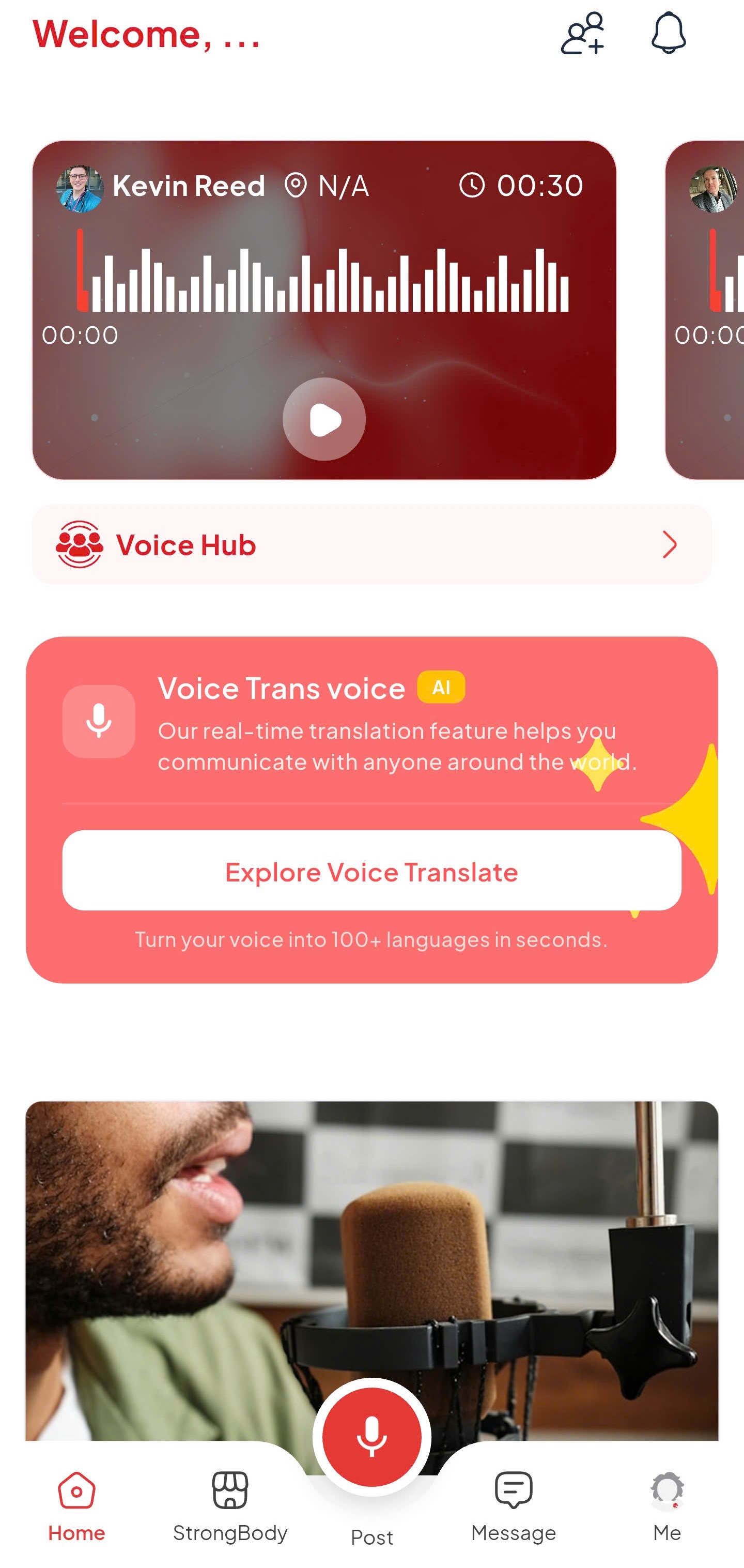
MultiMe AI Ecosystem directly addresses the five areas of export readiness by providing a single environment in which businesses can test, learn, and execute global selling without first building expensive parallel infrastructure. MultiMe AI Chat with AI Voice Translate removes language and communication barriers across 194 languages, allowing real-time negotiation and support that strengthens international communication readiness. Offer-in-Chat and Payment-by-Offer convert conversations into structured electronic contracts and immediate payment flows, tightening both financial and operational readiness. Escrow integration protects both parties until delivery is confirmed, reducing the payment-risk gap that causes many SMEs to abandon expansion.
Business Match and the request-and-offer marketplace let firms discover qualified international partners and buyers without relying solely on trade shows or cold outreach, accelerating marketing readiness. Expert-Shop creates a lightweight professional presence that can be shared via link or QR code across existing social networks, turning attention into conversion without the cost of a full international website. For service-oriented and knowledge-based businesses, the same tools enable personalized offers and secure transactions that scale beyond domestic or regional borders.
Because MultiMe AI is designed for global interaction from the first message, firms can begin practicing export readiness behaviors—cross-border communication, structured offers, multi-currency settlement—while still closing remaining gaps in product or operations. The platform therefore functions as both a diagnostic environment and an execution layer for global selling.
Frequently Asked Questions about Export Readiness
What is the difference between export readiness and simply having a good product?
Export readiness includes product suitability but also operational capacity, financial buffers, marketing systems, and cross-border communication skills. A good product without these supporting capabilities still produces failed market entries and high sunk costs.
How long does a realistic export readiness assessment and improvement cycle usually take?
Most SMEs need 6–12 months of focused work to close the highest-priority gaps identified in an export readiness assessment before committing significant resources to active international selling.
Can small service businesses achieve export readiness without physical goods logistics?
Yes. Service and knowledge businesses still require financial readiness for longer payment cycles, communication readiness across languages and cultures, and marketing systems that generate qualified international demand. Platforms that support structured offers and secure payments accelerate this path.
Why do so many SMEs abandon international expansion after initial attempts?
High trading costs, lack of foreign-payment capability, insufficient working capital, and absence of systematic buyer verification are repeatedly cited. These are classic symptoms of incomplete export readiness rather than lack of product quality.
Is export readiness a one-time status or an ongoing condition?
Export readiness is ongoing. Markets change, regulations update, and competitive intensity shifts. Periodic re-assessment ensures that earlier strengths do not become new gaps.
Call to Action
Assess your current export readiness with the checklist above. Identify the two or three highest-impact gaps and close them deliberately before allocating budget to trade shows or foreign marketing. Once foundational readiness is in place, explore the tools inside MultiMe AI Ecosystem—AI Voice Translate, Offer-in-Chat, Business Match, Expert-Shop, and secure payment flows—that allow you to practice and execute global selling in a lower-risk environment. Start the journey from measured readiness rather than hopeful ambition.
Read Next
How to Evaluate Your Export Potential